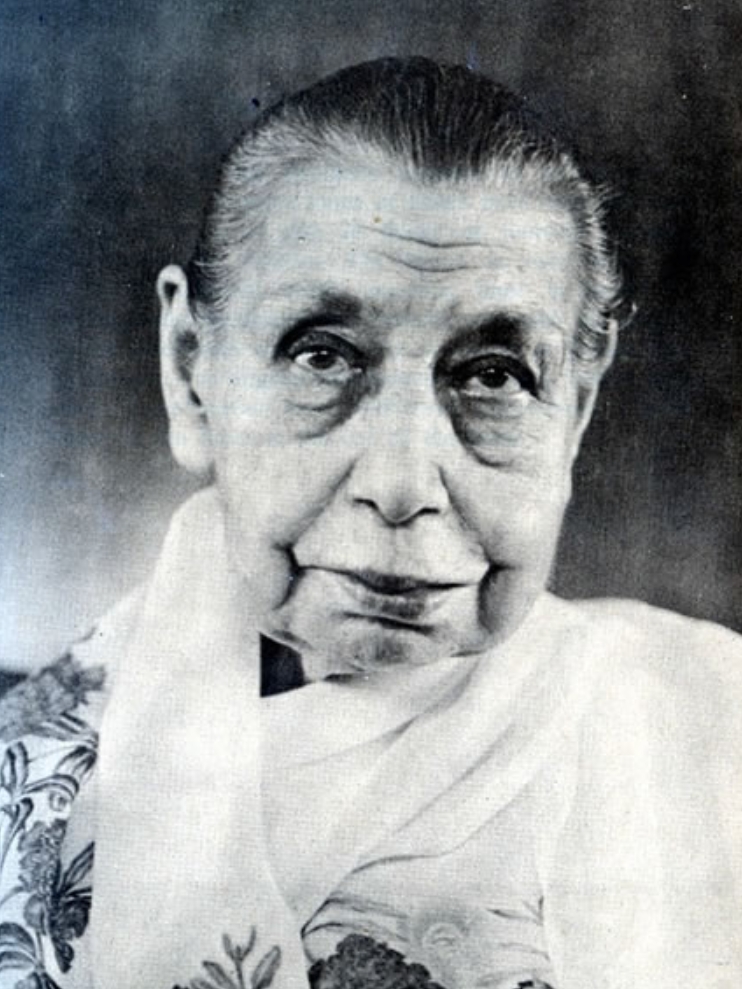
The fact that the anger comes with such force is itself enough to show that it is not in you that it is, but that it comes from outside. It is a rush of force from the universal Nature that tries to take possession of the individual being and make that being act according to the will of this outside force and not according to the will of the soul within. These things come in the course of the sadhana because the sadhak is liberating himself from the lower nature and trying to turn towards the Mother and live in her divine consciousness and the higher nature. The forces of the lower nature do not want that and so they make these rushes in order to recover their rule. It is necessary when that comes to remain quiet within remembering the Mother or calling her and reject the anger or whatever else comes, whenever it comes or however often it comes. If that is done, then these forces begin to lose their power to invade. It is easier if one clearly feels them to be outside forces and foreign to oneself; but even if you cannot feel that yet when they enter, still the mind must keep that idea and refuse to accept them as any longer a part of the nature. The idea of the Mother being severe was of course a suggestion that came with the invading force so as to help it to enter. Such suggestions come to many sadhaks (though not so many as before) at Pranam and is the cause to them of much disturbance. Such suggestions must be firmly rejected at once.
How to deal with it?
I think you have always had an idea that to give expression to an impulse or a movement is the best way or even the only way to get rid of it. But that is a mistaken idea. If you give expression to anger, you prolong or confirm the habit of the recurrence of anger; you do not diminish or get rid of the habit. The very first step towards weakening the power of anger in the nature and afterwards getting rid of it altogether, is to refuse all expression to it in act or speech. Afterwards one can go on with more likelihood of success to throw it out from the thought and feeling also. And so with all other wrong movements.
All these movements come from outside, from the universal lower nature, or are suggested or thrown upon you by adverse forces—adverse to your spiritual progress. Your method of taking them as your own is again a wrong method; for by doing that you increase their power to recur and take hold of you. If you take them as your own, that gives them a kind of right to be there. If you feel them as not your own, then they have no right, and the will can develop more power to send them away. What you must always have and feel as yours, is this will, the power to refuse assent, to refuse admission to a wrong movement. Or if it comes in, the power to send it away, without expressing it.
If you find it difficult to reject in the sense of throwing away, what you have to do is to refuse assent. As for instance, as regards voices or suggestions, not to listen to them, not to believe what they want you to believe, not to do what they want or push you to do.
Of course the best way will be if you can keep the contact more with the Mother and her Light and Force and receive and accept and follow only what comes from that higher force. Secondly, to keep the mind quiet, not to allow it to be too active, going from one thing to another. That brings the confusion.
O men! How can you utter the sublime word “Peace” when there is no peace in your hearts?
The War is over, so you say, and yet everywhere man is slaying man and Cain still sheds his brother’s blood!
***
For all those whom the Divine Grace has kept far from the horrible conflict which is tearing men at, the only way to express their gratitude is by a complete consecration of their whole being to the divine work.
On War, Words of The Mother – III, CWM, The Mother.
*****
The Words of Sri Aurobindo
Man’s illusions are of all sorts and kinds, some of them petty though not unimportant,—for nothing in the world is unimportant,—others vast and grandiose… One of the illusions incidental to this great hope is the expectation of the passing of war. This grand event in human progress is always being confidently expected and since we are now all scientific minds and rational beings, we no longer expect it by a divine intervention, but assign sound physical and economic reasons for the faith that is in us. The first form taken by this new gospel was the expectation and the prophecy that the extension of commerce would be the extinction of war. Commercialism was the natural enemy of militarism and would drive it from the face of the earth. The growing and universal lust of gold and the habit of comfort and the necessities of increased production and intricate interchange would crush out the lust of power and dominion and glory and battle. Gold-hunger or commodity-hunger would drive out earth-hunger, the dharma of the Vaishya would set its foot on the dharma of the Kshatriya and give it its painless quietus. The ironic reply of the gods has not been long in coming. Actually this very reign of commercialism, this increase of production and interchange, this desire for commodities and markets and this piling up of a huge burden of unnecessary necessities has been the cause of half the wars that have since afflicted the human race. And now we see militarism and commercialism united in a loving clasp, coalescing into a sacred biune duality of national life and patriotic aspiration and causing and driving by their force the most irrational, the most monstrous and nearly cataclysmic, the hugest war of modern and indeed of all historic times.
295—Be not deceived by men’s shows of virtue, neither disgusted by their open or secret vices. These things are the necessary shufflings in a long transition-period of humanity.
296—Be not repelled by the world’s crookednesses; the world is a wounded and venomous snake wriggling towards a destined off-sloughing and perfection. Wait, for it is a divine wager; and out of this baseness, God will emerge brilliant and triumphant.
Sri Aurobindo tells us that man is a transitional being and that from all the sufferings of the world will emerge a being of light capable of manifesting the Divine.
Thus, all those who are not satisfied with the world as it is, know that their aspiration does not rise in vain and that the world is changing.
If consecration and effort are associated with the aspiration, things will move faster.
The personal realisation of the Divine may be sometimes with Form, sometimes without Form. Without Form, it is the Presence of the living Divine Person, felt in everything. With Form, it comes with the image of the One to whom worship is offered. The Divine can always manifest himself in a form to the bhakta or seeker. One sees him in the form in which one worships or seeks him or in a form suitable to the Divine Personality who is the object of the adoration. How it manifests depends on many things and it is too various to be reduced to a single rule. Sometimes it is in the heart that the Presence with the form is seen, sometimes in any of the other centres, sometimes above and guiding from there; sometimes it is seen outside and in front as if an embodied Person. Its advantages are an intimate relation and constant guidance or if felt or seen within, a very strong and concrete realisation of the constant Presence. But one must be very sure of the purity of one’s adoration and seeking—for the disadvantage of this kind of embodied relation is that other Forces can imitate the Form or counterfeit the voice and the guidance and this gets more force if it is associated with a constructed image which is not the true thing. Several have been misled in this way because pride, vanity or desire was strong in them and robbed them of the finer psychic perception that is not mental and can at once turn the Mother’s light on such misleadings or errors.
The Parts of the Being and the Planes of the Consciousness, Letters on the Yoga – I, CWSA, Sri Aurobindo.
Everyone carries around him an environmental consciousness or atmosphere through which he is in relation with others or with the universal forces. It is through this that these forces or the thoughts or feelings of others enter.
***
Each man has his own personal consciousness entrenched in his body and gets into touch with his surroundings only through his body and senses and the mind using the senses.
Yet all the time the universal forces are pouring into him without his knowing it. He is aware only of thoughts, feelings etc. that rise to the surface and these he takes for his own. Really they come from outside in mind waves, vital waves, waves of feeling and sensation etc. which take particular forms in him and rise to the surface after they have got inside.
***
But they do not get into his body at once. He carries about with him an environmental consciousness (called by the Theosophists the aura) into which they first enter. If you can become conscious of this environmental self of yours, then you can catch the thought, passion, suggestion or force of illness, or whatever it may be, before it enters and prevent it from entering into you. If things in you are thrown out, they often do not go altogether but take refuge in this environmental atmosphere and from there try to get in again or they go to a distance outside but linger on the outskirts or even perhaps far off, waiting till they get an opportunity to attempt entrance.
***
These [forces of depression, dullness of mind, etc.] are things that wander about in the atmosphere and jump upon one without notice. It is often difficult to see where precisely they come from and often there is no reason at all or any inviting cause in oneself. They have simply to be thrown off as when something falls on the body.
*****
The Parts of the Being and the Planes of Consciousness, Letters on Yoga- I, CWSA, Sri Aurobindo.
Transcendence is the goal of the development, but it does not exclude the possession of that which is transcended. The soul need not and should not push transcendence so far as to aim at its own extinction. Nirvana is extinction of the ego-limitations, but not of all possibility of manifestation, since it can be possessed even in the body.
The desire of the exclusive liberation is the last desire that the soul in its expanding knowledge has to abandon; the delusion that it is bound by birth is the last delusion that it has to destroy.
Translation and Commentry Published, Isha Upanishad Analysis, CWSA, Sri Aurobindo.
All this can be realised by means of a fourfold discipline, the general outline of which is given here. The four aspects of the discipline do not exclude each other, and can be followed at the same time; indeed, this is preferable. The starting-point is what can be called the psychic discipline. We give the name “psychic” to the psychological centre of our being, the seat within us of the highest truth of our existence, that which can know this truth and set it in movement. It is therefore of capital importance to become conscious of its presence in us, to concentrate on this presence until it becomes a living fact for us and we can identify ourselves with it.
In various times and places many methods have been prescribed for attaining this perception and ultimately achieving this identification. Some methods are psychological, some religious, some even mechanical. In reality, everyone has to find the one which suits him best, and if one has an ardent and steadfast aspiration, a persistent and dynamic will, one is sure to meet, in one way or another—outwardly through reading and study, inwardly through concentration, meditation, revelation and experience—the help one needs to reach the goal. Only one thing is absolutely indispensable: the will to discover and to realise. This discovery and realisation should be the primary preoccupation of our being, the pearl of great price which we must acquire at any cost. Whatever you do, whatever your occupations and activities, the will to find the truth of your being and to unite with it must be always living and present behind all that you do, all that you feel, all that you think.
To complement this movement of inner discovery, it would be good not to neglect the development of the mind. For the mental instrument can equally be a great help or a great hindrance. In its natural state the human mind is always limited in its vision, narrow in its understanding, rigid in its conceptions, and a constant effort is therefore needed to widen it, to make it more supple and profound. So it is very necessary to consider everything from as many points of view as possible. Towards this end, there is an exercise which gives great suppleness and elevation to the thought. It is as follows: a clearly formulated thesis is set; against it is opposed its antithesis, formulated with the same precision. Then by careful reflection the problem must be widened or transcended until a synthesis is found which unites the two contraries in a larger, higher and more comprehensive idea.
Many other exercises of the same kind can be undertaken; some have a beneficial effect on the character and so possess a double advantage: that of educating the mind and that of establishing control over the feelings and their consequences. For example, you must never allow your mind to judge things and people, for the mind is not an instrument of knowledge; it is incapable of finding knowledge, but it must be moved by knowledge. Knowledge belongs to a much higher domain than that of the human mind, far above the region of pure ideas. The mind has to be silent and attentive to receive knowledge from above and manifest it. For it is an instrument of formation, of organisation and action, and it is in these functions that it attains its full value and real usefulness.
There is another practice which can be very helpful to the progress of the consciousness. Whenever there is a disagreement on any matter, such as a decision to be taken, or an action to be carried out, one must never remain closed up in one’s own conception or point of view. On the contrary, one must make an effort to understand the other’s point of view, to put oneself in his place and, instead of quarrelling or even fighting, find the solution which can reasonably satisfy both parties; there always is one for men of goodwill.
Here we must mention the discipline of the vital. The vital being in us is the seat of impulses and desires, of enthusiasm and violence, of dynamic energy and desperate depressions, of passions and revolts. It can set everything in motion, build and realise; but it can also destroy and mar everything. Thus it may be the most difficult part to discipline in the human being. It is a long and exacting labour requiring great patience and perfect sincerity, for without sincerity you will deceive yourself from the very outset, and all endeavour for progress will be in vain. With the collaboration of the vital no realisation seems impossible, no transformation impracticable. But the difficulty lies in securing this constant collaboration. The vital is a good worker, but most often it seeks its own satisfaction. If that is refused, totally or even partially, the vital gets vexed, sulks and goes on strike. Its energy disappears more or less completely and in its place leaves disgust for people and things, discouragement or revolt, depression and dissatisfaction. At such moments it is good to remain quiet and refuse to act; for these are the times when one does stupid things and in a few moments one can destroy or spoil the progress that has been made during months of regular effort. These crises are shorter and less dangerous for those who have established a contact with their psychic being which is sufficient to keep alive in them the flame of aspiration and the consciousness of the ideal to be realised. They can, with the help of this consciousness, deal with their vital as one deals with a rebellious child, with patience and perseverance, showing it the truth and light, endeavouring to convince it and awaken in it the goodwill which has been veiled for a time. By means of such patient intervention each crisis can be turned into a new progress, into one more step towards the goal. Progress may be slow, relapses may be frequent, but if a courageous will is maintained, one is sure to triumph one day and see all difficulties melt and vanish before the radiance of the truth-consciousness.
Lastly, by means of a rational and discerning physical education, we must make our body strong and supple enough to become a fit instrument in the material world for the truth-force which wants to manifest through us.
In fact, the body must not rule, it must obey. By its very nature it is a docile and faithful servant. Unfortunately, it rarely has the capacity of discernment it ought to have with regard to its masters, the mind and the vital. It obeys them blindly, at the cost of its own well-being. The mind with its dogmas, its rigid and arbitrary principles, the vital with its passions, its excesses and dissipations soon destroy the natural balance of the body and create in it fatigue, exhaustion and disease. It must be freed from this tyranny and this can be done only through a constant union with the psychic centre of the being. The body has a wonderful capacity of adaptation and endurance. It is able to do so many more things than one usually imagines. If, instead of the ignorant and despotic masters that now govern it, it is ruled by the central truth of the being, you will be amazed at what it is capable of doing. Calm and quiet, strong and poised, at every minute it will be able to put forth the effort that is demanded of it, for it will have learnt to find rest in action and to recuperate, through contact with the universal forces, the energies it expends consciously and usefully. In this sound and balanced life a new harmony will manifest in the body, reflecting the harmony of the higher regions, which will give it perfect proportions and ideal beauty of form. And this harmony will be progressive, for the truth of the being is never static; it is a perpetual unfolding of a growing perfection that is more and more total and comprehensive. As soon as the body has learnt to follow this movement of progressive harmony, it will be possible for it to escape, through a continuous process of transformation, from the necessity of disintegration and destruction. Thus the irrevocable law of death will no longer have any reason to exist.
When we reach this degree of perfection which is our goal, we shall perceive that the truth we seek is made up of four major aspects: Love, Knowledge, Power and Beauty. These four attributes of the Truth will express themselves spontaneously in our being. The psychic will be the vehicle of true and pure love, the mind will be the vehicle of infallible knowledge, the vital will manifest an invincible power and strength and the body will be the expression of a perfect beauty and harmony.
Bulletin, November 1950
The Science of Living, On Education, CWM, The Mother.
Every one of you should have an aim. But do not forget that on the quality of your aim will depend the quality of your life.
Your aim should be high and wide, generous and disinterested; this will make your life precious to yourself and to others.
But whatever your ideal, it cannot be perfectly realised unless you have realised perfection in yourself.
To work for your perfection, the first step is to become conscious of yourself, of the different parts of your being and their respective activities. You must learn to distinguish these different parts one from another, so that you may become clearly aware of the origin of the movements that occur in you, the many impulses, reactions and conflicting wills that drive you to action. It is an assiduous study which demands much perseverance and sincerity. For man’s nature, especially his mental nature, has a spontaneous tendency to give a favourable explanation for everything he thinks, feels, says and does. It is only by observing these movements with great care, by bringing them, as it were, before the tribunal of our highest ideal, with a sincere will to submit to its judgment, that we can hope to form in ourselves a discernment that never errs. For if we truly want to progress and acquire the capacity of knowing the truth of our being, that is to say, what we are truly created for, what we can call our mission upon earth, then we must, in a very regular and constant manner, reject from us or eliminate in us whatever contradicts the truth of our existence, whatever is opposed to it. In this way, little by little, all the parts, all the elements of our being can be organised into a homogeneous whole around our psychic centre. This work of unification requires much time to be brought to some degree of perfection. Therefore, in order to accomplish it, we must arm ourselves with patience and endurance, with a determination to prolong our life as long as necessary for the success of our endeavour.
As you pursue this labour of purification and unification, you must at the same time take great care to perfect the external and instrumental part of your being. When the higher truth manifests, it must find in you a mind that is supple and rich enough to be able to give the idea that seeks to express itself a form of thought which preserves its force and clarity. This thought, again, when it seeks to clothe itself in words, must find in you a sufficient power of expression so that the words reveal the thought and do not deform it. And the formula in which you embody the truth should be manifested in all your feelings, all your acts of will, all your actions, in all the movements of your being. Finally, these movements themselves should, by constant effort, attain their highest perfection.
The Science of Living, On Education, CWM, The Mother.
The nature of your difficulty indicates the nature of the victory you will gain, the victory you will exemplify in Yoga. Thus, if there is persistent selfishness, it points to a realisation of universality as your most prominent achievement in the future. And, when selfishness is there, you have also the power to reverse this very difficulty into its opposite, a victory of utter wideness.
When you have something to realise, you will have in you just the characteristic which is the contradiction of that something. Face to face with the defect, the difficulty, you say, “Oh, I am like that! How awful it is!” But you ought to see the truth of the situation. Say to yourself, “My difficulty shows me clearly what I have ultimately to represent. To reach the absolute negation of it, the quality at the other pole—this is my mission.”
Even in ordinary life, we have sometimes the experience of contraries. He who is very timid and has no courage in front of circumstances proves capable of bearing the most!
To one who has the aspiration for the Divine, the difficulty which is always before him is the door by which he will attain God in his own individual manner: it is his particular path towards the Divine Realisation.
There is also the fact that if somebody has a hundred difficulties it means he will have a tremendous realisation—provided, of course, there are in him patience and endurance and he keeps the aspiring flame of Agni burning against those defects.
And remember: the Grace of the Divine is generally proportioned to your difficulties.