The Right Basis for Relationships — Mother

The force of soul in thee meeting the same force from outside cannot harmonise the measures of the contact in values of mind-experience and body-experience; therefore thou hast pain, grief or uneasiness. If thou canst learn to adjust the replies of the force in thyself to the questions of world-force, thou shalt find pain becoming pleasurable or turning into pure delightfulness. Right relation is the condition of blissfulness, Ritam¹ the key of Ananda.²

Human beings are in the habit of basing their relationships with others on physical, vital and mental contacts; that is why there is almost always discord and suffering. If, on the contrary, they based their relationships on psychic contacts (between soul and soul), they would find that behind the troubled appearances there is a profound and lasting harmony which can express itself in all the activities of life and cause disorder and suffering to be replaced by peace and bliss.

28 August 1969

CWM – On Thoughts and Aphorisms – 138 – Volume 10 pp.245-146

Right; Truth of knowledge and action.¹

Delight of existence.
Posted in Life, Soul, The Mother | Leave a comment

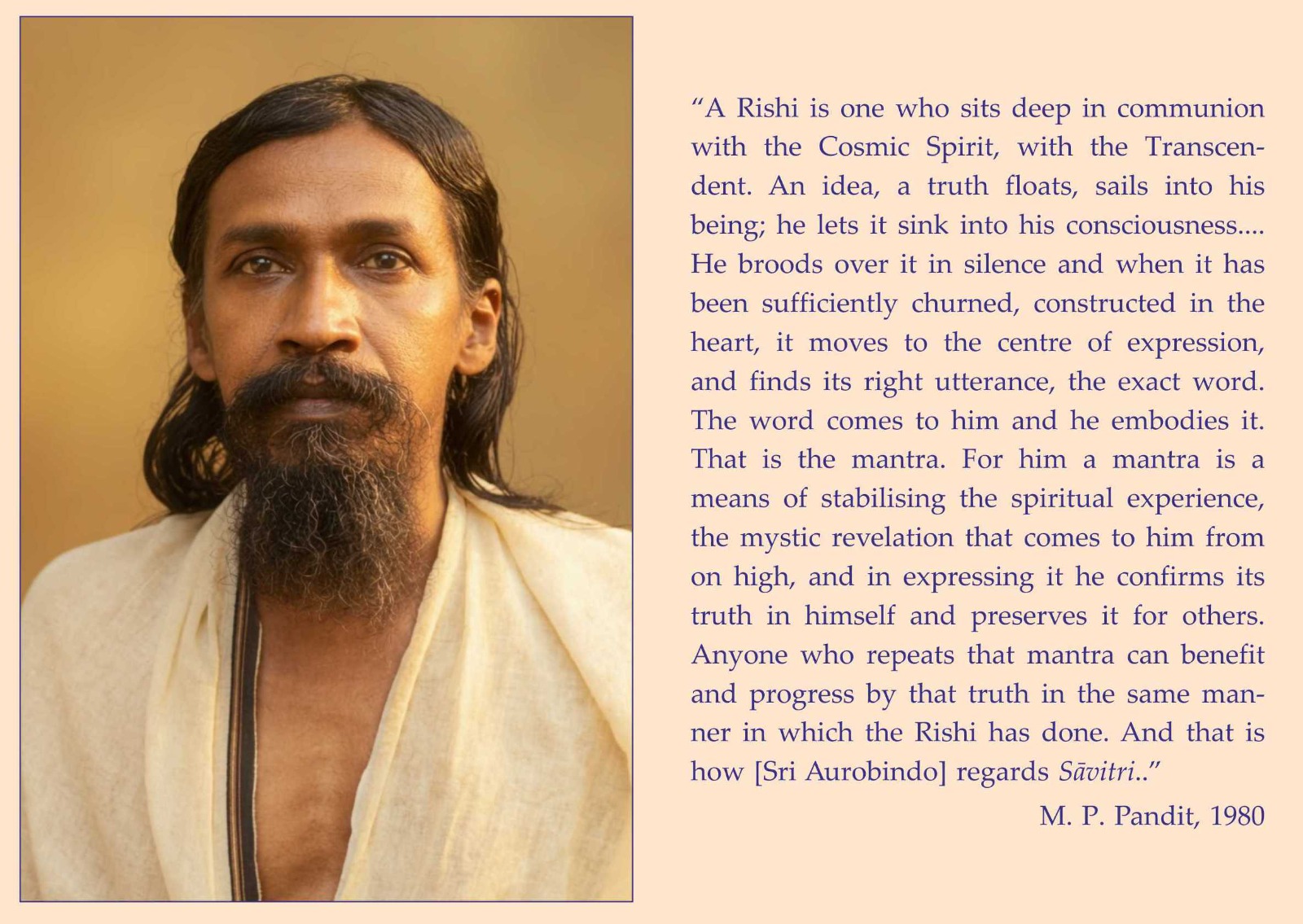
On Rishi

Posted in Life, Savitri Offering | Leave a comment

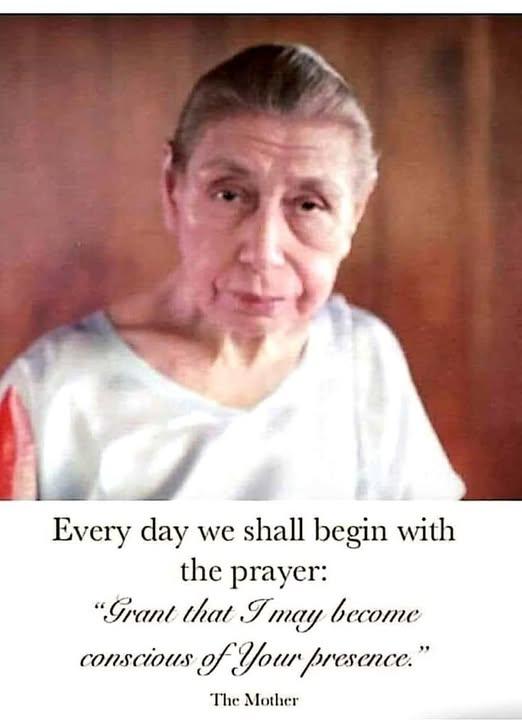
A Prayer for Everyday — Mother

Posted in Life, The Mother | Leave a comment

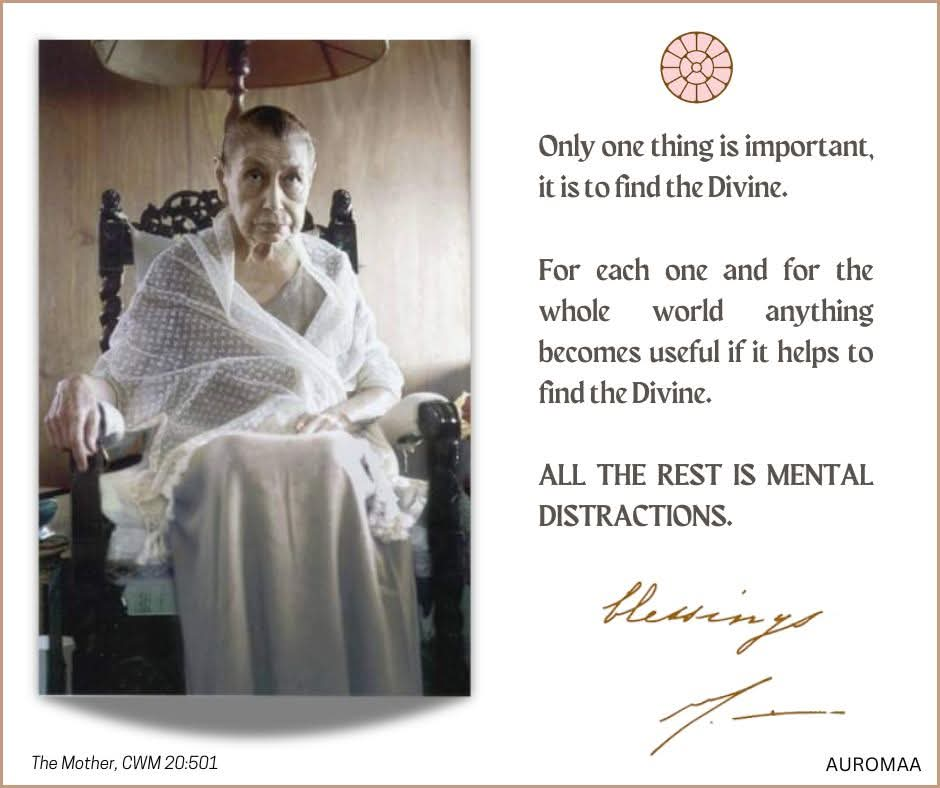
Reminder: The Only Important Thing — Mother

Posted in Life, Sadhana, Soul, The Mother, Travelling the Path | Leave a comment

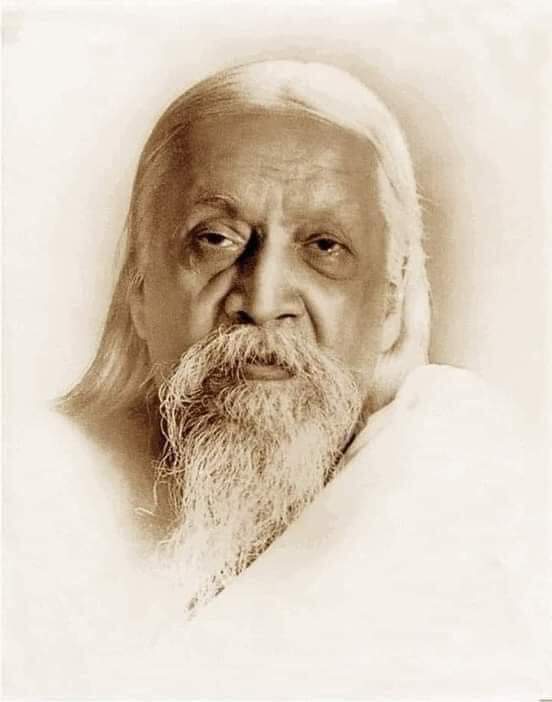
What Does it Take to be an Integral Stoic — Sri Aurobindo

It will appear from the description of the complete and perfect equality that this equality has two sides. It must therefore be arrived at by two successive movements. One will liberate us from the action of the lower nature and admit us to the calm peace of the divine being; the other will liberate us into the full being and power of the higher nature and admit us to the equal poise and universality of a divine and infinite knowledge, will of action, Ananda. The first may be described as a passive or negative equality, an equality of reception which fronts impassively the impacts and phenomena of existence and negates the dualities of the appearances and reactions which they impose on us. The second is an active, a positive equality which accepts the phenomena of existence, but only as the manifestation of the one divine being and with an equal response to them which comes from the divine nature in us and transforms them into its hidden values. The first lives in the peace of the one Brahman and puts away from it the nature of the active Ignorance. The second lives in that peace, but also in the Ananda of the Divine and imposes on the life of the soul in nature the signs of the divine knowledge, power and bliss of being. It is this double orientation united by the common principle which will determine the movement of equality in the integral Yoga.

The Way of Equality, Synthesis of Yoga- II, CWSA, Sri Aurobindo.

Posted in Sadhana, Sri Aurobindo | Leave a comment

For Sadhaks Self-Control Protects from Difficulties in the Outer World — Mother

The difficulties that are within are also without. You can, to a certain extent, establish an inner equilibrium, but you live in surroundings full of imbalance. Unless you shut yourself up in an ivory tower (which is not only difficult but not always recommendable), you are obliged to receive what comes from outside. You give and you receive; you breathe in and absorb. So there is a mixture and that is why one can say that all is contagious, for you live in a state of ceaseless vibrations. You give out your vibrations and receive also the vibrations of others, and these vibrations are of a very complex kind. There are still (we shall say for simplifying the language) mental vibrations, vital vibrations, physical vibrations and many others. You give, you receive; you give, you receive. It is a perpetual play. Even granting that there is no bad will, there is necessarily contagion. And as I was saying just now, all is contagious, everything. You are looking at the effect of an accident: you absorb a certain vibration. And if you are over-sensitive and, over and above that, you have fear or disgust (which is the same thing, disgust is only a moral expression of a physical fear), the accident can be translated physically in your body. Naturally you will be told that those who have such reactions are in a state of nervous imbalance. It is not quite true. They are persons with an ultra-suprasensitive vital, that is all. And it is not always a proof of inferiority, on the contrary! For as you progress spiritually, a certain hypersensitivity of the nerves occurs and if your self-control does not increase along with your sensibility, all kinds of untoward things may happen to you.

Questions and Answers, Vol 5, CWM, The Mother.

Posted in Sadhana, The Mother, Travelling the Path | 1 Comment

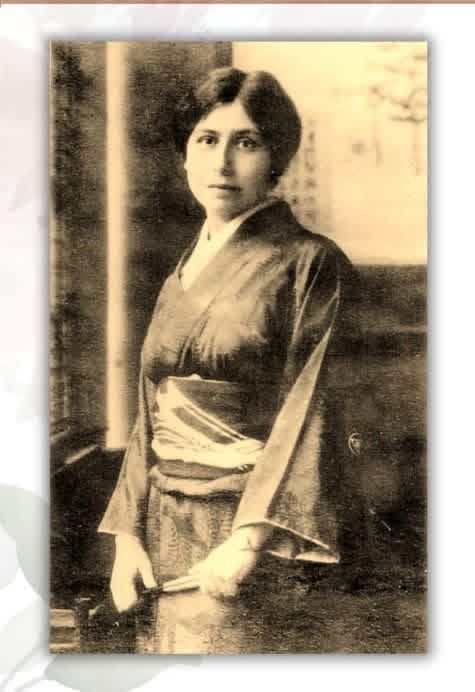
Jyotipriya: an Instrument of Sri Aurobindo’s Light

We take a moment today to fondly remember and offer our gratitude to Jyotipriya, founder of East-West Cultural Center, on the occasion of her 124th birth anniversary. The Mother and Sri Aurobindo, her spiritual Gurus, in whom she had taken refuge, gave her the name “Lover of Light” (Jyotipriya).  

Her life was a luminous example of Mother’s maxim:  “Our life ought to be governed by the love for Truth and the thirst for Light”.  An ardent seeker of the spirit, Jyoti was graced with the Realization of the Soul.  The deeply inspiring and outstanding aspect of her quest was her selfless spirit; her pilgrim feet both led and carried along with her many an aspirant on the path.  We are reminded of Sri Aurobindo’s beautiful aphorisms:   “Beatitude is God’s aim or humanity; get this supreme good for thyself first that thou mayest distribute it entirely to thy fellow-beings”.

Those who would like to learn more about Jyotipriya, may follow this link for a short biography of her life:  


 https://sriaurobindocenterla.wordpress.com/jyoti/

Posted in Jyoti | 1 Comment

Inspiration is Always a Very Uncertain Thing — Sri Aurobindo

Inspiration is always a very uncertain thing; it comes when it chooses, stops suddenly before it has finished its work, refuses to descend when it is called. This is a well-known affliction, perhaps of all artists, but certainly of poets. There are some who can command it at will; those who, I think, are more full of an abundant poetic energy than careful for perfection; others who oblige it to come whenever they put pen to paper but with these the inspiration is either not of a high order or quite unequal in its level. Again there are some who try to give it a habit of coming by always writing at the same time; Virgil with his nine lines first written, then perfected every morning, Milton with his fifty epic lines a day, are said to have succeeded in regularising their inspiration. It is, I suppose, the same principle which makes gurus in India prescribe for their disciples a meditation at the same fixed hour every day. It succeeds partially of course, for some entirely, but not for everybody. For myself, when the inspiration did not come with a rush or in a stream,—for then there is no difficulty,—I had only one way, to allow a certain kind of incubation in which a large form of the thing to be done threw itself on the mind and then wait for the white heat in which the entire transcription could rapidly take place. But I think each poet has his own way of working and finds his own issue out of inspiration’s incertitudes.

26 January 1932

Letters on Poetry and Art, Vol 27, CWSA.

Posted in Life, Sri Aurobindo | Leave a comment

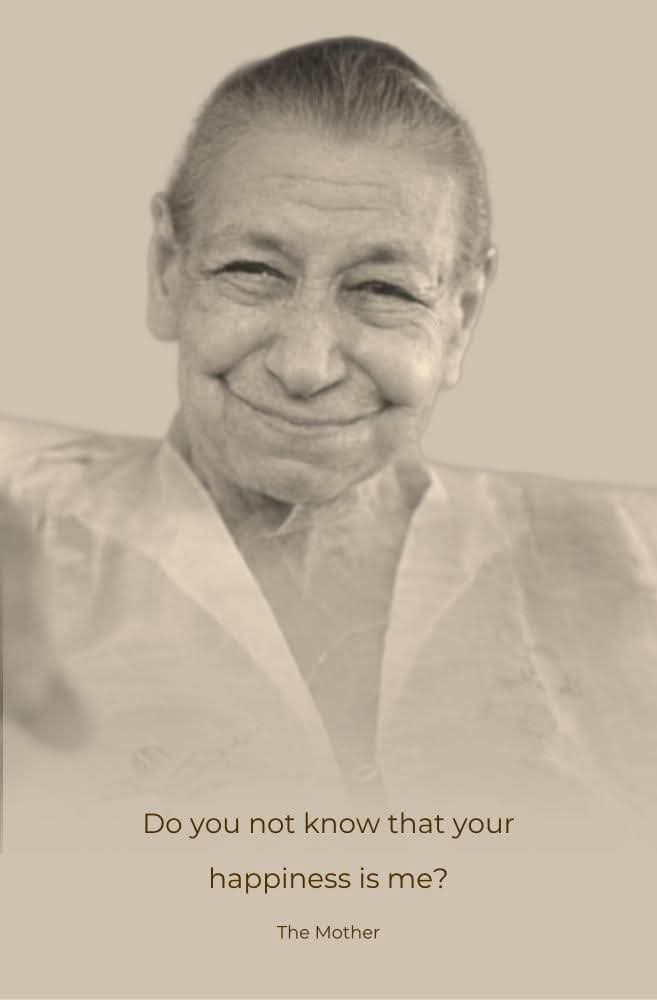
Source of True Happiness — Mother

Posted in Soul | Leave a comment

The True Lasting Quietness — Mother

The quiet mind one gets through meditation is indeed of short duration, for as soon as you come out from meditation you come out at the same time from the quietness of mind. The true lasting quietness in the vital and the physical as well as in the mind comes from a complete consecration to the Divine; for when you can no more call anything, not even yourself, yours, when everything, including your body, sensations, feelings and thoughts, belongs to the Divine, the Divine takes the entire responsibility of all and you have nothing more to worry about.

~The Mother
(CWM 14:100)

Posted in Life, Sadhana, The Mother | Leave a comment