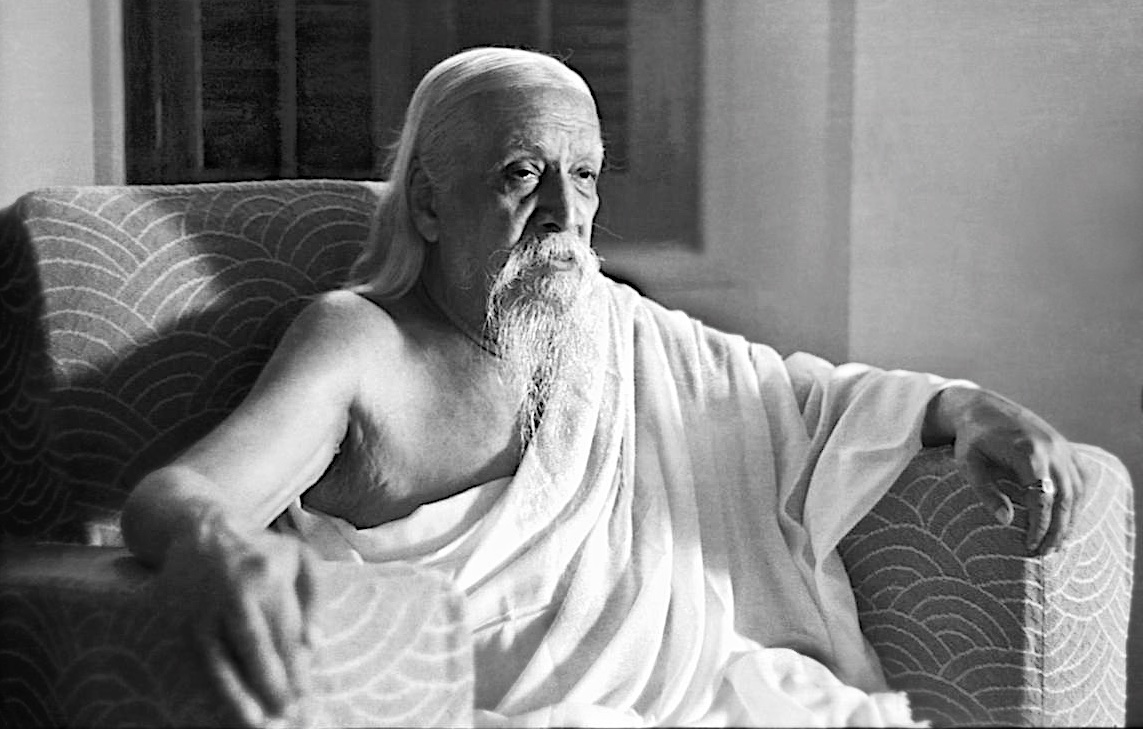
In The Hour of God — Sri Aurobindo

There are moments when the Spirit moves among men and the breath of the Lord is abroad upon the waters of our being; there are others when it retires and men are left to act in the strength or the weakness of their own egoism. The first are periods when even a little effort produces great results and changes destiny; the second are spaces of time when much labour goes to the making of a little result. It is true that the latter may prepare the former, may be the little smoke of sacrifice going up to heaven which calls down the rain of God’s bounty.

Unhappy is the man or the nation which, when the divine moment arrives, is found sleeping or unprepared to use it, because the lamp has not been kept trimmed for the welcome and the ears are sealed to the call. But thrice woe to them who are strong and ready, yet waste the force or misuse the moment; for them is irreparable loss or a great destruction.

In the hour of God cleanse thy soul of all self-deceit and hypocrisy and vain self-flattering that thou mayst look straight into thy spirit and hear that which summons it. All insincerity of nature, once thy defence against the eye of the Master and the light of the ideal, becomes now a gap in thy armour and invites the blow. Even if thou conquer for the moment, it is the worse for thee, for the blow shall come afterwards and cast thee down in the midst of thy triumph. But being pure cast aside all fear; for the hour is often terrible, a fire and a whirlwind and a tempest, a treading of the winepress of the wrath of God; but he who can stand up in it on the truth of his purpose is he who shall stand; even though he fall, he shall rise again; even though he seem to pass on the wings of the wind, he shall return. Nor let worldly prudence whisper too closely in thy ear; for it is the hour of the unexpected.

The Hour of God, Essays Divine and Human, CWSA, Sri Aurobindo.
Posted in Sri Aurobindo, Supramental, Travelling the Path | 1 Comment

Direct Road to Psychic — Sri Aurobindo

I did not mean by the inner being the psychic or inmost being. It is the psychic being that feels love, bhakti and union with the Mother. I was speaking of the inner mental, inner vital, inner physical; in order to reach the hidden seat of the psychic one has first to pass through these things. When one leaves the outer consciousness and goes inside, it is here that one enters—some or most entering into the inner vital first, others into the inner mental or inner physical; the emotional vital is the most direct road, for the seat of the psychic is just behind the emotional in the heart centre. It is absolutely necessary for our purpose that one should become conscious in these inner regions, for if they are not awake, then the psychic being has no proper and sufficient instrumentation for its activities; it has then only the outer mind, outer vital and body for its means and these are too small and narrow and obscure. You as yet have been able only to enter the outskirts of the inner vital and are still insufficiently conscious there. By becoming more conscious there and going deeper one can reach the psychic—the safe refuge, nirāpad sthāna, of which you speak, and you will not be disturbed by the confused visions and experiences of the inner vital outskirts.

The Parts of the Being and Planes of Consciousness, Letters on Yoga – I, Vol 28, CWSA, Sri Aurobindo.

Posted in Psychic, Sadhana, Sri Aurobindo | 1 Comment

Divine Consciousness — Mother

Think only of the Divine
Live only for the Divine
Aspire only to the Divine
Love only the Divine
Work only for the Divine.

Relationship with the Divine, Vol 20, CWM, The Mother.

Posted in Life, Mind, The Mother, Thoughts to ponder, Work | Leave a comment

Making Progress — Mother

Suppose that you want to make a progress regarding attachment to food, for example; well, almost constantly there will come to you thoughts particularly interested in food, about what should be taken, what should not be taken, how it should be taken, how it should not be taken; and these ideas will come to you, they will seem quite natural to you. And the more you say within yourself, “Oh! how I would like to be free from all that, what a hindrance to my progress are all these preoccupations”, the more will they come, quietly, until the progress is truly made within and you have risen to a level of consciousness where you can see all these things from above and put them in their place―which is not a very big place in the universe! And so on, for all things. Therefore, your occupations and affinities are going to put you almost contradictorily into contact not only with ideas having an affinity and relation with your way of being, but with the opposite. And if you don’t take care from the beginning to keep an attitude of discernment, you will be turned into a mental battlefield.

If you know how to rise to a higher level, simply into a region of the speculative mind which is not quite the ordinary physical mind, you can see all this play and all this struggle, all this conflict, all these contradictions as a curiosity which does not touch or affect you. If you rise a step higher still and see the goal towards which you want to go, you will gradually come to discern between ideas favourable to your progress which you will keep, and ideas opposed to this progress which harm and impair it; and from above you will have the power to set them aside, calmly, without being otherwise affected by them. But if you remain there, at that level in the midst of that confusion and conflict, well, you risk getting a headache!

The best thing to do is to occupy yourself with something practical which will compel you to concentrate specially: studies, work or some physical occupation for the body which demands attention―anything at all that forces you to concentrate on what you are doing and no longer be a prey to these ramblings. But if you have the misfortune to remain there and look at them, then surely, as I said, you will get a headache. For it is a problem which must be resolved either by a descent into practical life and a concentration on some practical effort or else by rising above and looking from above at all this chaos so as to be able to bring some order into it and set it right.

But one must never remain on the same plane, it is a plane which is no good either for physical or moral health.

June 27, 1965.

Questions and Answers, Vol 8, CWM, The Mother

Posted in Sadhana, The Mother, Travelling the Path | Leave a comment

Becoming Fit for The Yoga — Sri Aurobindo

If you want to change, you must first resolutely get rid of the defects of your vital being, persevering steadily, however difficult it may be or however long it may take, calling in always the divine help and compelling yourself always to be entirely sincere.

As for fitness and unfitness, nobody is entirely fit for this Yoga; one has to become fit by aspiration, by abhyāsa, by sincerity and surrender. If you have always desired the spiritual life, it is the psychic part of you that desired it, but your vital has always come in the way. Establish a sincere will in the vital; do not allow personal desires and demands and selfishness and falsehood to mix in your sadhana; then alone the vital in you will become fit for the sadhana. Lately you seem to have made a more sincere endeavour; if you want it to succeed, the endeavour must become always purer and more steady and persistent. If you practise sincerely, you will get the help needed by you.If you take the right attitude in your work, that itself will bring the help. The right attitude is to work for the sake of the Divine, as an offering, without demand for any reward, without selfish claims and desires, without self-assertion and arrogance, not quarrelling with your fellow workers, thinking it to be the Mother’s work and not your own, and trying to feel her power behind the work. If you can do that, your nature will progress and change.I write this much in answer to your letter because I find in it a beginning of vital sincerity which was not there before. The rest depends upon you. If you become vitally sincere, the help will be with you.

Sadhana on the Level of Vital, Letters on Yoga – IV, CWSA, Sri Aurobindo.

Posted in Life, Sadhana, Sri Aurobindo, Travelling the Path | Leave a comment

The Thinking Mind and the Vital Mind — Sri Aurobindo

The thinking mind does not lead men, does not influence them the most—it is the vital propensities and the vital mind that predominate. The thinking mind with most men is, in matters of life, only an instrument of the vital.

The Parts of the Being, Letters on Yoga – I, CWSA, Sri Aurobindo.

Posted in Life, Sri Aurobindo, Thoughts to ponder | Leave a comment

To Know How to Suffer — Mother

If at any time a deep sorrow, a searing doubt or an intense pain overwhelms you and drives you to despair, there is an infallible way to regain calm and peace.

In the depths of our being there shines a light whose brilliance is equalled only by its purity; a light, a living and conscious portion of a universal godhead who animates and nourishes and illumines Matter, a powerful and unfailing guide for those who are willing to heed his law, a helper full of solace and loving forbearance towards all who aspire to see and hear and obey him. No sincere and lasting aspiration towards him can be in vain; no strong and respectful trust can be disappointed, no expectation ever deceived.

My heart has suffered and lamented, almost breaking beneath a sorrow too heavy, almost sinking beneath a pain too strong…. But I have called to thee, O divine comforter, I have prayed ardently to thee, and the splendour of thy dazzling light has appeared to me and revived me.

As the rays of thy glory penetrated and illumined all my being, I clearly perceived the path to follow, the use that can be made of suffering; I understood that the sorrow that held me in its grip was but a pale reflection of the sorrow of the earth, of this abysm of suffering and anguish.

Only those who have suffered can understand the suffering of others; understand it, commune with it and relieve it. And I understood, O divine comforter, sublime Holocaust, that in order to sustain us in all our troubles, to soothe all our pangs, thou must have known and felt all the sufferings of earth and man, all without exception.

How is it that among those who claim to be thy worshippers, some regard thee as a cruel torturer, as an inexorable judge witnessing the torments that are tolerated by thee or even created by thy own will?

No, I now perceive that these sufferings come from the very imperfection of Matter which, in its disorder and crudeness, is unfit to manifest thee; and thou art the very first to suffer from it, to bewail it, thou art the first to toil and strive in thy ardent desire to change disorder into order, suffering into happiness, discord into harmony.

Suffering is not something inevitable or even desirable, but when it comes to us, how helpful it can be!

Each time we feel that our heart is breaking, a deeper door opens within us, revealing new horizons, ever richer in hidden treasures, whose golden influx brings once more a new and intenser life to the organism on the brink of destruction.

And when, by these successive descents, we reach the veil that reveals thee as it is lifted, O Lord, who can describe the intensity of Life that penetrates the whole being, the radiance of the Light that floods it, the sublimity of the Love that transforms it for ever!

1910.

Words of Long Ago, Vol 2, CWM, The Mother.

Posted in Sadhana, Self-giving, The Mother, Travelling the Path | Leave a comment

What Can I Do Better Than Anyone Else?

We should never tell ourselves, openly or indirectly, “I want to be great, what vocation can I find for myself in order to become great?”

On the contrary, we should tell ourselves, “There must certainly be something I can do better than anyone else, since each one of us is a special mode of manifestation of the divine power which, in its essence, is one in all. However humble and modest it may be, this is precisely the thing to which I should devote myself, and in order to find it, I shall observe and analyse my tastes, tendencies and preferences, and I shall do it without pride or excessive humility, whatever others may think I shall do it just as I breathe, just as the flower smells sweet, quite simply, quite naturally, because I cannot do otherwise.”

As soon as we have abolished within us, even for a moment, all egoistic desires, all personal and selfish aims, we can surrender to this inner spontaneity, this deep inspiration which will enable us to commune with the living and progressive forces of the universe.

The conception of our work will inevitably grow more perfect as we grow more perfect ourselves; and to realise this growing perfection, no effort to exceed ourselves should be neglected, but the work we perform must become always more and more joyful and spontaneous, like water welling from a pure spring.

May 14, 1912.

Words of Long Ago, Vol 2, CWM, The Mother.

Posted in Sadhana, The Mother, Travelling the Path, Work | Leave a comment

Let Me Be Only Thy Servant — Mother

Humbly, quietly, my prayer rises to Thee, O sweet Master, Thou who acceptest without argument and without censure all that is offered to Thee, Thou who givest Thyself and makest Thyself known to all, without asking whether they are worthy of it or not, Thou who findest nothing too weak, too small, too modest, too inadequate to manifest Thee….

Let me lay myself at Thy feet, let me melt into Thy heart and disappear in Thee, let me be annihilated in Thy beatitude, or rather let me be only Thy servant, claiming nothing more. I desire, I aspire for nothing else. To be only Thy servant is all I ask.

July 27, 1914.

Prayers and Meditations, Vol 1, CWM, The Mother.

Posted in Self-giving, The Mother | Leave a comment

The Object of Our Yoga — Sri Aurobindo

The object of our Yoga is self-perfection, not self-annulment.

There are two paths set for the feet of the Yogin, withdrawal from the universe and perfection in the Universe; the first comes by asceticism, the second is effected by tapasya; the first receives us when we lose God in Existence, the second is attained when we fulfil existence in God. Let ours be the path of perfection, not of abandonment; let our aim be victory in the battle, not the escape from all conflict.

Buddha and Shankara supposed the world to be radically false and miserable; therefore escape from the world was to them the only wisdom. But this world is Brahman, the world is God, the world is Satyam, the world is Ananda; it is our misreading of the world through mental egoism that is a falsehood and our wrong relation with God in the world that is a misery. There is no other falsity and no other cause of sorrow.

God created the world in Himself through Maya; but the Vedic meaning of Maya is not illusion, it is wisdom, knowledge, capacity, wide extension in consciousness. Prajna prasrita purani. Omnipotent Wisdom created the world, it is not the organised blunder of some Infinite Dreamer; omniscient Power manifests or conceals it in Itself or Its own delight, it is not a bondage imposed by His own ignorance on the free and absolute Brahman.

If the world were Brahman’s self-imposed nightmare, to awake from it would be the natural and only goal of our supreme endeavour; or if life in the world were irrevocably bound to misery, a means of escape from this bondage would be the sole secret worth discovering. But perfect truth in world-existence is possible, for God here sees all things with the eye of truth; and perfect bliss in the world is possible, for God enjoys all things with the sense of unalloyed freedom. We also can enjoy this truth and bliss, called by the Veda amritam, Immortality, if by casting away our egoistic existence into perfect unity with His being we consent to receive the divine perception and the divine freedom.

The world is a movement of God in His own being; we are the centres and knots of divine consciousness which sum up and support the processes of His movement. The world is His play with His own self-conscious delight, He who alone exists, infinite, free and perfect; we are the self-multiplications of that conscious delight, thrown out into being to be His playmates. The world is a formula, a rhythm, a symbol-system expressing God to Himself in His own consciousness,—it has no material existence but exists only in His consciousness and self-expression; we, like God, are in our inward being That which is expressed, but in our outward being terms of that formula, notes of that rhythm, symbols of that system. Let us lead forward God’s movement, play out His play, work out His formula, execute His harmony, express Him through ourselves in His system. This is our joy and our self-fulfilment; to this end we who transcend & exceed the universe, have entered into universe-existence.

Perfection has to be worked out, harmony has to be accomplished. Imperfection, limitation, death, grief, ignorance, matter, are only the first terms of the formula—unintelligible till we have worked out the wider terms and reinterpreted the formulary; they are the initial discords of the musician’s tuning. Out of imperfection we have to construct perfection, out of limitation to discover infinity, out of death to find immortality, out of grief to recover divine bliss, out of ignorance to rescue divine self-knowledge, out of matter to reveal Spirit. To work out this end for ourselves and for humanity is the object of our Yogic practice.

Essays Divine and Human, Vol 12, CWSA, Sri Aurobindo.

Posted in Life, Sadhana, Self-giving, Soul, Sri Aurobindo | Leave a comment